
Projects

An Early Warning System for Vesicular Stomatitis Virus Emergence
Vesicular stomatitis virus (VSV) is a vector-borne pathogen of livestock that circulates endemically in the neotropics from southern Mexico to northern South America. VSV emerges periodically into the US, causing outbreaks across the mountain west for one to three years before receding.
The trigger for these outbreaks is unknown, and indeed many key aspects of VSV ecology remain to be discovered. Our team works as part of a larger USDA Grand Challenge project and with SENASICA in Mexico and UNA and SENASA in Costa Rica and to elucidate VSV transmission dynamics in its endemic region and to investigate the long-suspected but never yet demonstrated sylvatic cycle of VSV.
Funding: USDA NACA 58-8064-9-012, 58-3022-2-018 & 58-3022-3-042
Transmission-Clearance Trade-Offs
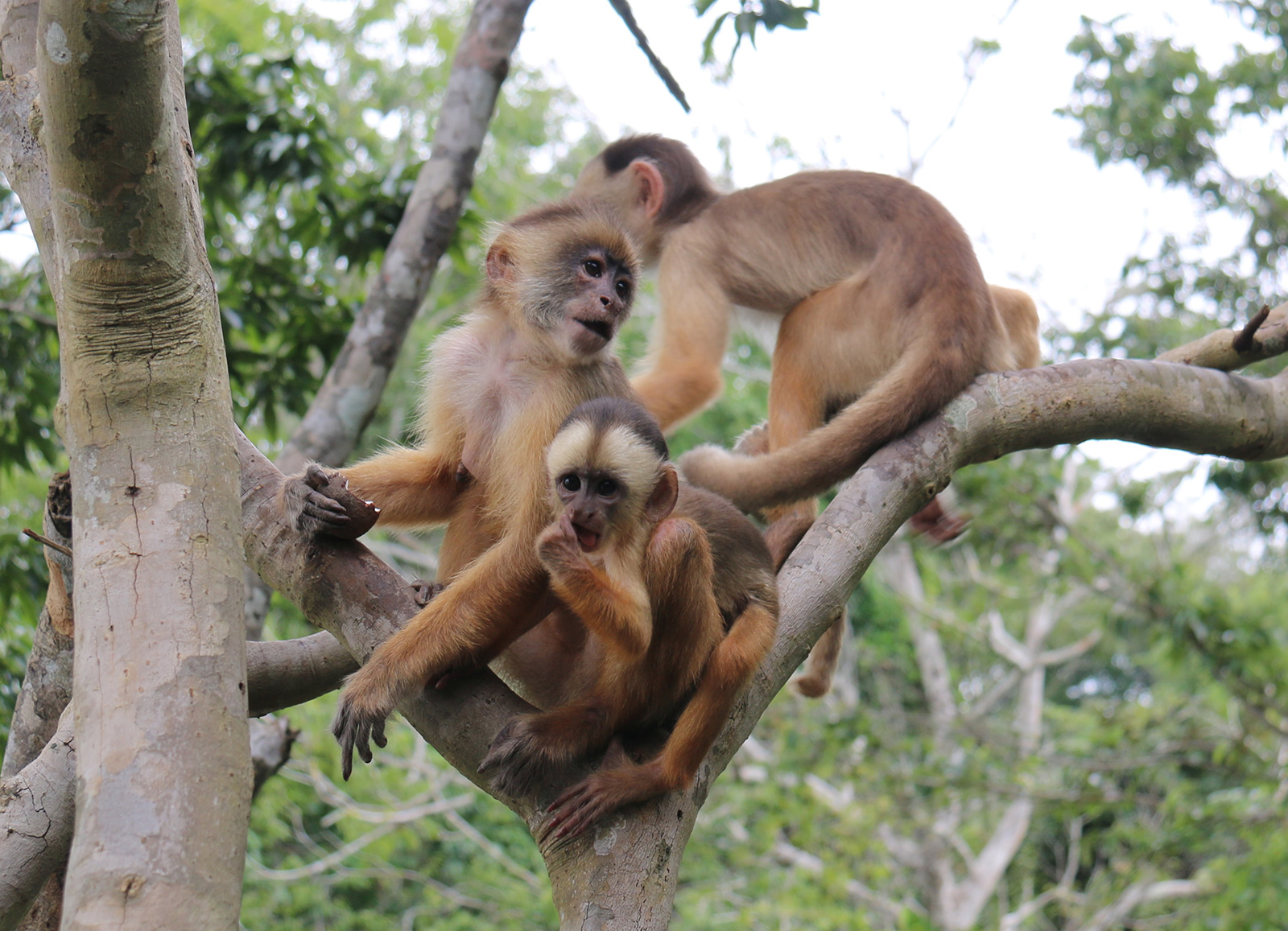
The evolution of pathogen virulence is shaped, in part, by the trade-off between the level of pathogen replication, which determines instantaneous rate of transmission, and the duration of infection. While most studies have focused on pathogen-induced mortality as the regulator of infection duration, we are testing how the innate immune response shapes the transmission-clearance trade-off for dengue virus and Zika virus in native and novel non-human primate hosts. The results of this study will enhance our current understanding of the factors that shape virus evolution and our ability to predict virus emergence. This study is a collaboration among Kathy Hanley, Nik Vasilakis (UTMB), Ben Althouse (NMSU and UW), Shannan Rossi (UTMB), Sasha Azar (Houston Methodist), and Hélène Cecilia (INRAE).
Funding: NIH R01AI145918
Burning Down the Mouse
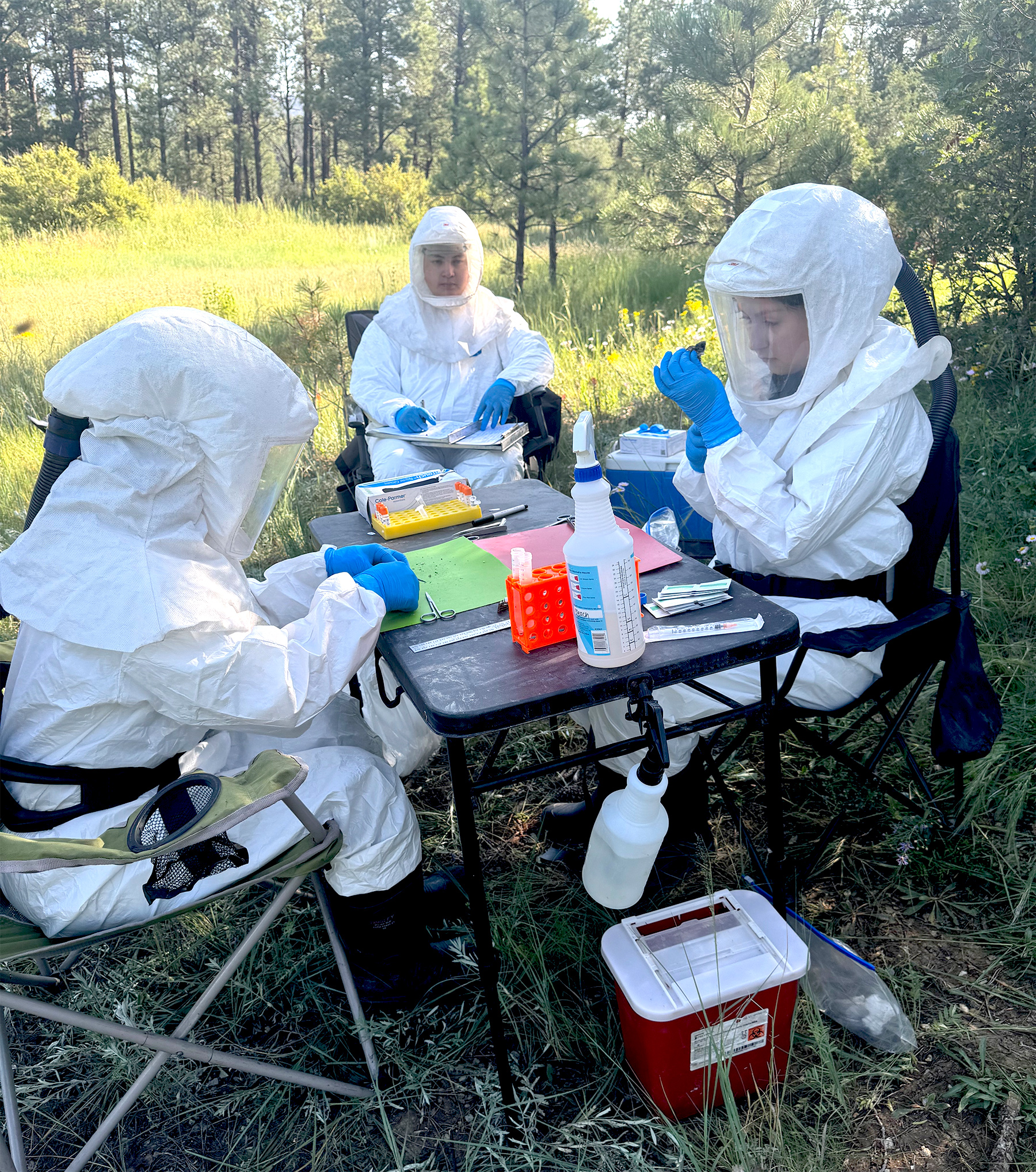
Wildfires are remodeling the landscape in the southwestern US, potentially altering the transmission dynamics of wildlife-borne pathogens. We are investigating the impact of wildfire in New Mexico on the prevalence of Sin Nombre virus in its major reservoir host, the western deer mouse. When humans are exposed to aerosolized deer mouse excreta they can become infected with Sin Nombre virus and can experience hantavirus cardiopulmonary syndrome. We have compared the prevalence of Sin Nombre virus in mice collected on sites that burned in one of two separate New Mexico wildfires two years prior to collection, ecologically matched control sites that did not burn, and sites that burned and were subsequently reseeded to mitigate against landslides. Prevalence did not differ between burned and unburned sites but was twice as high (almost 50%) in burned, reseeded sites, emphasizing the need for caution when utilizing reseeded areas.
Funded by: Joint Fire Science Program Graduate Research Innovation Award and USDA McIntire-Stennis Capacity Funds
New Mexico Zoonotic and Arthropod-Borne Pathogens (NM-ZAP)
NM-ZAP subsumes three surveillance projects focused on vectors on New Mexico. All three are run jointly by the Hanley and Hansen labs at NMSU:

New Mexico Tick-Borne Infections Consortium (NM-TIC) seeks to define the prevalence of rickettsial pathogens in brown dog ticks withing the southern, middle and western regions of the state.
Funded as a subproject from CDC NU51CK000346-02-01.

New Mexico Vector-borne Arbovirus and Mosquito Protection and Surveillance (NM-VAMPS), NMSU team, surveils mosquitoes across the southern half of the state for key viral pathogens, including West Nile virus and St. Louis encephalitis virus.
Funded by NM State Senate Bill 79

Genetic Explorations of Aedes aegypti Networks across the Southwest (GEANS) uses network theory and topological data analysis to understand how spatial scale influences population structure and connectivity in Ae.aegypti (sub)populations throughout the southwest
Funded by NIH RO1 AI184428 to JR McMillan, subcontract to NMSU
Circulation, Spillover and Emergence of Sylvatic Dengue Virus
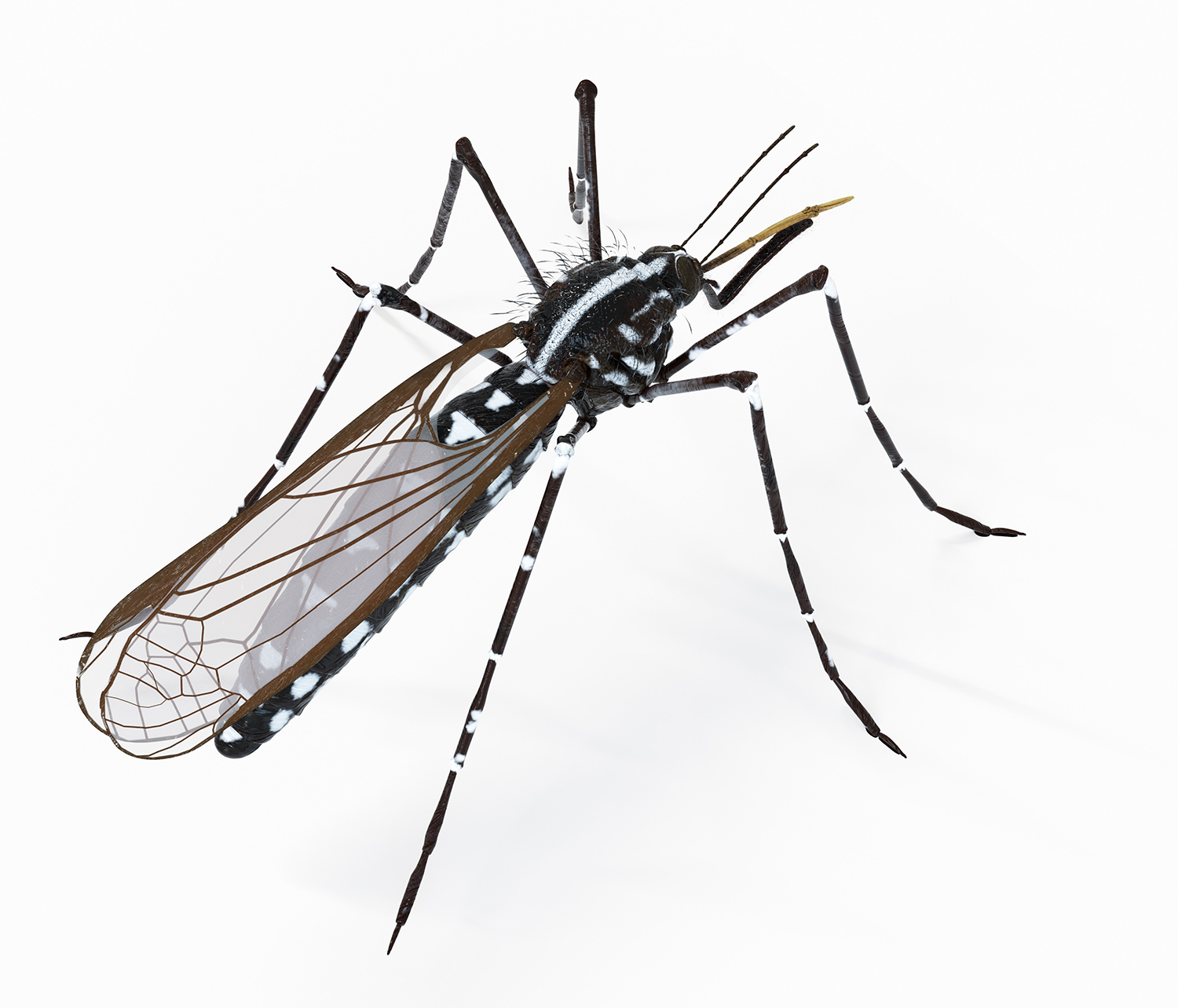
The four serotypes of dengue virus that currently circulate between humans and urban Aedes mosquito species all originated from a sylvatic cycle in the forest canopies of Southeast Asia maintained in forest- living Aedes mosquitoes and wildlife. The Hanley lab investigates the ecology and evolution of sylvatic dengue virus in the field and in the lab using a combination of surveillance, experiments and modeling.